Always On, Always Watching: The Hidden Data Life of Your Smart Home Devices
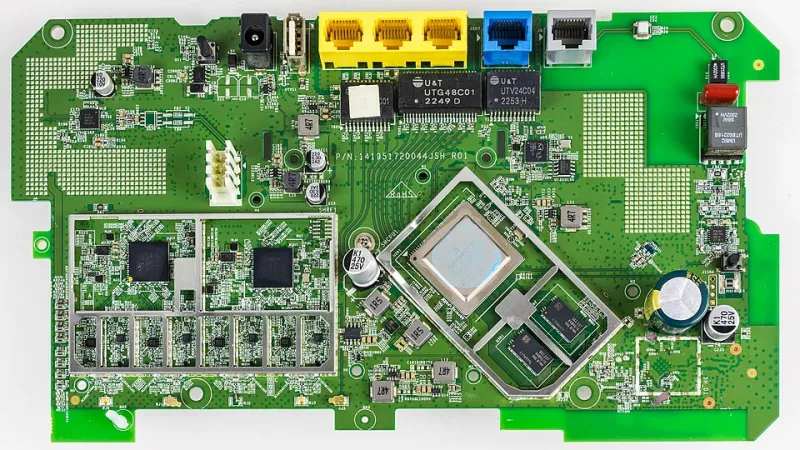
Photo: Raimond Spekking, CC BY-SA 4.0, via Wikimedia Commons
The pitch is irresistible: a home that responds to your voice, adjusts the thermostat before you ask, and lets you check the front door from a thousand miles away. Tens of millions of American households have embraced smart home technology, and the market shows no sign of slowing. What the product packaging rarely explains, however, is the continuous data exchange happening in the background — one that persists long after you've pressed mute, covered the camera lens, or simply assumed the device is idle.
This is not a fringe concern. It is a documented, measurable reality that security researchers have been raising for years, and one that deserves serious attention from anyone with a connected device plugged into their home network.
The 'Wake Word' Problem Is Bigger Than You Think
Every major smart speaker — Amazon Echo, Google Nest, Apple HomePod — relies on a wake word to trigger its cloud-connected response engine. The underlying premise is simple: the device listens locally for that specific phrase, and only then sends audio to remote servers for processing. In practice, the boundary is considerably blurrier.
Researchers at Northeastern University and Imperial College London published findings showing that popular smart speakers activate unintentionally dozens of times per day, often triggered by words or sounds that phonetically resemble their wake words. When those false activations occur, audio snippets are transmitted to manufacturer servers — sometimes including fragments of private conversations.
Amazon acknowledged in 2019 that a small team of human contractors reviewed voice recordings to improve Alexa's accuracy. Google faced similar scrutiny in Europe after recordings were leaked to Belgian broadcaster VRT NWS. Apple temporarily suspended its Siri grading program following a whistleblower report to The Guardian. Each company subsequently updated its policies, but the episode illustrated a fundamental tension: improving AI voice recognition requires human review of real-world audio, and that audio originates inside your home.
Background Transmission: What Your Devices Send When You're Not Looking
Voice assistants are only part of the picture. Smart televisions, robotic vacuums, connected appliances, and security cameras all maintain persistent data pipelines that operate independently of their primary functions.
A 2020 study by researchers at Princeton University's IoT Inspector project analyzed network traffic from dozens of consumer smart home devices. Their findings were striking. Several smart TV brands contacted advertising and analytics servers hundreds of times per day, transmitting device identifiers, usage patterns, and in some cases, content information. Certain robotic vacuum models uploaded detailed floor-plan maps to manufacturer cloud infrastructure — data that, in the wrong hands, could reveal the physical layout of a private residence.
Security camera manufacturer Wyze disclosed a breach in 2022 in which approximately 2.4 million customer records were exposed through an unsecured database. A separate incident in early 2024 resulted in 13,000 Wyze customers briefly seeing thumbnail images from other users' cameras — a consequence of a caching error that underscored how interconnected, and therefore fragile, cloud-dependent camera systems can be.
Ring, Amazon's doorbell camera subsidiary, faced regulatory scrutiny from the Federal Trade Commission, which in 2023 finalized a settlement requiring the company to delete data collected improperly and pay $5.8 million in consumer refunds. The FTC's complaint alleged that Ring had allowed employees and contractors broad access to customer video footage.
What Privacy Settings Actually Do — and What They Don't
Most manufacturers offer privacy settings that sound reassuringly comprehensive: microphone mute buttons, camera shutters, data deletion dashboards, and opt-out toggles for personalized advertising. These controls are genuine, but their scope is frequently misunderstood.
Physical mute buttons on smart speakers do reliably disable microphone input — hardware-level interruption is among the most trustworthy controls available to consumers. Software-based muting, by contrast, depends entirely on the device's firmware behaving as advertised, a guarantee that third-party audits have occasionally called into question.
Data deletion dashboards allow users to remove stored recordings and interaction histories, but they generally do not affect data that has already been shared with third-party analytics partners or used to train machine-learning models. Opting out of personalized advertising typically prevents your data from being used for ad targeting within that manufacturer's ecosystem — it does not prevent the collection or transmission of behavioral and diagnostic data.
Hardening Your Smart Home Without Gutting Its Functionality
Practical security improvements do not require abandoning connected devices entirely. A layered approach can meaningfully reduce exposure while preserving most of what makes smart home technology convenient.
Isolate IoT devices on a separate network. Most modern home routers support the creation of a guest or secondary Wi-Fi network. Placing smart speakers, cameras, and appliances on this isolated segment prevents a compromised device from having direct access to computers, phones, or sensitive files on your primary network.
Audit device permissions regularly. Review the companion app for each connected device and revoke any permissions — location, contacts, microphone access on mobile — that are not strictly necessary for its core function.
Enable two-factor authentication on manufacturer accounts. Your smart camera footage, thermostat schedule, and door lock history are stored in cloud accounts. Securing those accounts with a strong, unique password and two-factor authentication is the single most impactful step most users can take.
Disable features you do not use. Voice purchasing on smart speakers, always-on video streaming, and third-party skill integrations all expand the data surface. If you are not actively using a feature, turning it off reduces the information your device collects and transmits.
Keep firmware current. Manufacturers regularly release updates that patch known vulnerabilities. Enabling automatic firmware updates ensures your devices benefit from security fixes without requiring manual attention.
Consider a hardware firewall or DNS-level filtering. Tools such as Pi-hole or commercial equivalents like Firewalla allow homeowners to monitor outbound traffic from every device on the network and block connections to known tracking and advertising domains.
The Broader Implication
Smart home technology is not inherently adversarial. The data collection that makes these devices functional is, in many cases, a genuine engineering necessity rather than pure surveillance opportunism. The problem is one of transparency and proportionality — consumers frequently have no meaningful visibility into what is being collected, where it is going, or how long it is retained.
Until regulatory frameworks in the United States catch up with the scale of IoT data collection — the American Data Privacy and Protection Act has stalled repeatedly in Congress — the responsibility for understanding and managing smart home privacy falls largely on individual users. That is an imperfect arrangement. But it is the current reality, and approaching it with informed skepticism is considerably better than the alternative.