Your Heartbeat Is for Sale: The Hidden Data Economy Inside Health and Wellness Apps
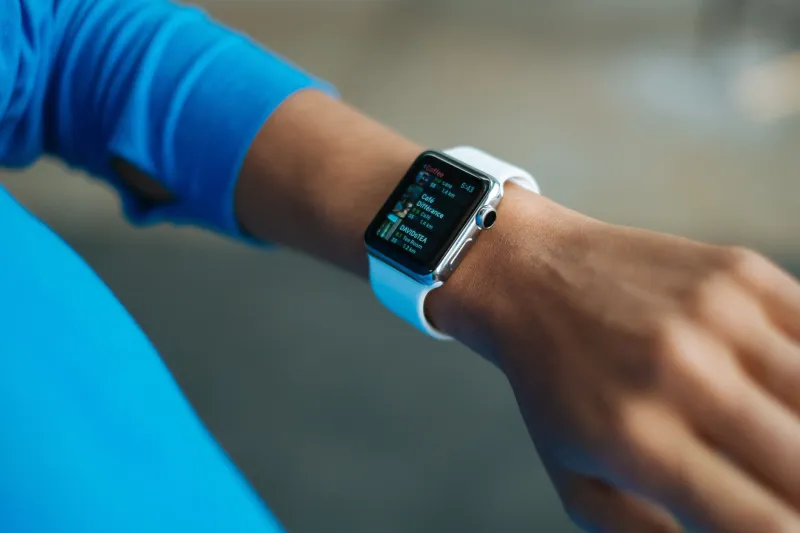
Americans have embraced digital wellness with remarkable enthusiasm. Tens of millions now wear devices that track their resting heart rate, monitor their sleep architecture, log their menstrual cycles, and measure stress responses through skin conductance. Meditation apps record how often anxiety spikes. Nutrition platforms map dietary patterns down to the calorie. Taken together, these tools assemble a biological portrait more detailed than anything a physician sees in a routine annual exam.
What most users do not fully appreciate is who else is studying that portrait — and what they intend to do with it.
The Data That Health Apps Actually Collect
The phrase "health data" understates the scope of what modern wellness applications gather. Beyond the obvious metrics — step counts, workout duration, body weight — leading platforms routinely capture:
- Biometric identifiers: resting and active heart rate, blood oxygen saturation, skin temperature fluctuations, and, in newer devices, electrocardiogram readings.
- Behavioral patterns: sleep onset and wake times, REM and deep-sleep ratios, and nighttime movement.
- Reproductive health data: menstrual cycle timing, ovulation predictions, and fertility windows — categories that carry particular legal sensitivity in a post-Dobbs legal landscape.
- Mental health indicators: self-reported mood logs, session frequency in meditation or therapy apps, and stress-score trends over time.
- Location and context: GPS routes tied to workouts, gym check-ins, and proximity data that can reveal where a person spends nights.
Each data point may seem benign in isolation. Aggregated over months or years, they form an actuarial profile of extraordinary granularity.
Where the Data Goes: A Deliberately Murky Trail
Most health and wellness apps operate under privacy policies that are technically compliant with applicable law while remaining practically incomprehensible to ordinary readers. The Federal Trade Commission has repeatedly flagged the gap between what companies disclose in dense legal language and what users actually understand they are consenting to.
The destinations for this data typically fall into several categories:
Advertising networks and data brokers. Many free wellness apps are funded not by subscriptions but by the sale or licensing of aggregated user data to third-party marketing firms. The data is often described as "de-identified," but academic research has demonstrated repeatedly that small combinations of biometric attributes — age, resting heart rate range, sleep duration, ZIP code — can re-identify individuals with high accuracy.
Research partnerships. Some platforms share data with academic institutions or pharmaceutical companies under broad research provisions buried in their terms of service. Users rarely receive meaningful notification when their health patterns contribute to commercial drug research.
Insurance-adjacent entities. While the Health Insurance Portability and Accountability Act (HIPAA) governs data held by covered healthcare providers, it does not apply to most consumer wellness apps. A fitness tracker company is not a covered entity under HIPAA. The legal protections many Americans assume surround their health information simply do not extend to the apps on their phones.
Acquisitions and bankruptcy sales. When a wellness startup is acquired or collapses financially, its user database — including years of intimate health records — becomes an asset that transfers to new ownership under terms the original users never reviewed.
Why Bad Actors and Institutions Seek This Data
The commercial appetite for health data is matched by a more troubling interest from parties with adversarial intentions.
Insurers, despite regulatory restrictions in many states, have demonstrated interest in behavioral and biometric data as underwriting signals. Employers operating wellness incentive programs — which are technically voluntary but carry financial penalties for non-participation — collect health metrics that can subtly influence personnel decisions. Law enforcement agencies have, in documented cases, sought health app data through subpoenas with varying degrees of legal scrutiny.
Cybercriminals pursue health data for different reasons. Medical records command a significantly higher price on illicit marketplaces than financial credentials, partly because they contain stable identifiers — blood type, chronic conditions, biometric baselines — that cannot be changed the way a credit card number can. A compromised health profile can enable insurance fraud, targeted social engineering, and extortion scenarios that exploit stigmatized conditions.
Evaluating Health Apps: A Practical Framework
Not every wellness platform treats user data irresponsibly. Distinguishing trustworthy applications from data-harvesting operations requires systematic evaluation rather than reliance on brand reputation alone.
1. Determine whether HIPAA applies. If an app is connected to a licensed healthcare provider, hospital system, or health plan, HIPAA protections likely apply. Standalone consumer wellness apps almost certainly fall outside that coverage. Confirm this before assuming legal protections exist.
2. Read the data-sharing section of the privacy policy specifically. Ignore the introductory language about how much the company values your trust. Locate the section describing third-party sharing. Look for phrases like "service providers," "business partners," "affiliates," and "research partners" — each is a potential data exit point. Count how many unnamed third parties the policy references.
3. Check for a data deletion mechanism. Reputable platforms honor deletion requests and confirm when data has been purged from their systems and from third-party partners. Test this by submitting a deletion request and documenting the response.
4. Review the app's permissions on your device. A meditation app has no legitimate need for continuous location access. A sleep tracker does not require access to your contact list. Permissions that exceed functional necessity are a significant warning sign.
5. Investigate the company's acquisition history and financial health. A wellness startup that has changed ownership or is operating under financial strain presents elevated risk that your data will be transferred under terms you did not agree to.
6. Prefer local processing over cloud dependency. Some health platforms, particularly those in the Apple ecosystem, offer on-device data processing that limits what leaves your device. Where this option exists, it materially reduces exposure.
7. Consult independent privacy ratings. Organizations such as the Electronic Frontier Foundation and the nonprofit Common Sense Media publish periodic evaluations of consumer app privacy practices that provide third-party perspective beyond what companies self-report.
The Regulatory Gap and What May Change
The United States currently lacks a comprehensive federal privacy law that covers consumer health data outside HIPAA's narrow scope. Several states — California, Virginia, Colorado, and Washington among them — have enacted or are developing health data protections that extend to consumer apps. Washington's My Health MY Data Act, which took effect in 2024, represents the most aggressive state-level attempt to close this gap, requiring explicit consent for the collection and sharing of consumer health data.
At the federal level, the FTC has used its authority under Section 5 of the FTC Act to pursue enforcement actions against wellness companies that misrepresented their data practices. But enforcement is reactive rather than preventive, and settlements rarely result in consequences proportionate to the scale of exposure.
The Informed Choice
Abandoning digital health tools entirely is neither realistic nor necessarily advisable; for many users, the monitoring they enable provides genuine medical value. The more defensible position is informed, selective engagement — understanding precisely what data a given application collects, where it travels, and under what conditions it might be used against the person it was meant to serve.
The wellness industry has built a remarkable apparatus for turning human vulnerability — the desire to be healthier, calmer, more rested — into a commercial data supply chain. Recognizing that dynamic is the first step toward participating in it on terms that do not leave your most intimate information exposed to parties whose interests diverge sharply from your own.