The Store Knows You Are Coming Before You Walk Through the Door
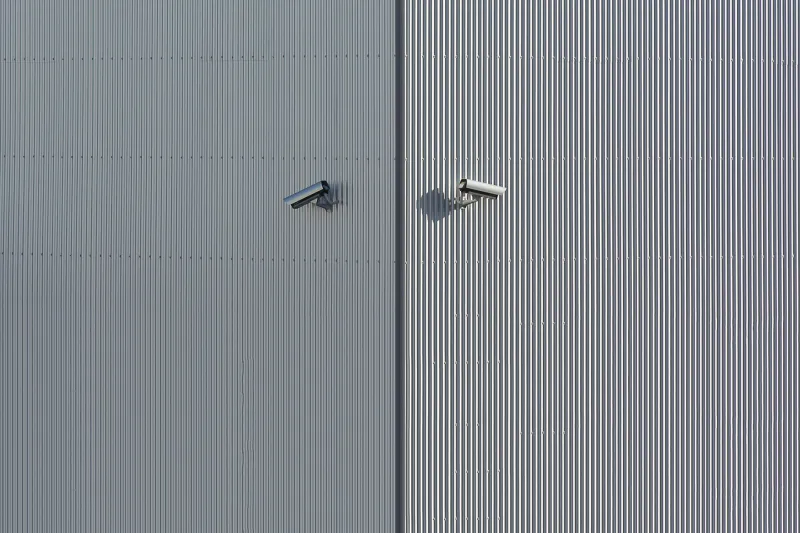
When Americans think about digital surveillance, they tend to think about their phones, their browsers, and the apps they have installed. The physical world, by contrast, feels more private — a space where behavior is observed only by other people, not catalogued by machines. That intuition is increasingly out of date.
The modern American retail environment is instrumented to a degree that most shoppers would find startling. The same data-collection logic that governs the internet — observe, record, analyze, monetize — has migrated into physical space, and it operates largely without the disclosure requirements that even the modest framework of digital privacy law demands.
The Invisible Infrastructure Beneath the Retail Floor
The most pervasive form of in-store tracking is also the least visible. When you carry a smartphone through a retail space, your device is constantly broadcasting probe requests — signals sent to search for known WiFi networks. Even if you never connect to the store's WiFi, your phone is announcing its presence to any receiver within range. Each probe request includes your device's MAC address, a hardware identifier that can be used to track your movement through a space and, across multiple visits, to build a profile of your shopping patterns.
Retail analytics companies sell systems that capture these signals using antennas embedded in ceiling tiles, point-of-sale displays, and shopping cart corrals. The systems can measure how long you stood in a particular aisle, which products you paused in front of, which entrance you used, and how your path through the store compared to your behavior on previous visits. Modern Android and iOS versions implement MAC address randomization to partially address this vulnerability — but the randomization is imperfect, and some implementations can be circumvented by persistent tracking systems.
Bluetooth beacons operate on a complementary principle. Small, inexpensive transmitters placed throughout a retail space communicate with apps installed on your phone — including, in some cases, apps you have already granted Bluetooth permissions without connecting the permission to this specific use case. A retailer's official app, once installed and granted the relevant permissions, can silently log your position within the store to within a few feet.
Facial Recognition Enters the Aisle
Camera-based tracking systems have advanced considerably beyond the grainy loss-prevention footage of the 1990s. A growing number of American retailers have deployed facial recognition systems capable of identifying individuals from camera feeds without requiring any prior enrollment. These systems work by extracting a mathematical representation of your facial geometry — a "faceprint" — and comparing it against databases that may include driver's license photos, social media profile pictures, or records from previous retail interactions.
The legal landscape governing this practice in the United States remains fragmented. Illinois and Texas have enacted biometric privacy laws that impose consent requirements and carry meaningful penalties for violations. Most other states have no specific legislation addressing facial recognition in commercial settings. The result is a patchwork in which the same technology may be legal in one state and actionable in another, and consumers in many parts of the country have no clear legal recourse.
Gait analysis represents a newer and less-discussed capability. Unlike facial recognition, which can be partially defeated by face coverings, gait analysis identifies individuals by the unique characteristics of how they walk — stride length, cadence, posture, and movement patterns. These characteristics are difficult to alter consciously and remain identifiable even when a face is obscured. Several retail analytics vendors now offer gait-recognition modules as an add-on to existing camera infrastructure.
The Data Marketplace Behind the Checkout Line
The profiles built through these systems do not remain within a single retailer's walls. A well-developed ecosystem of data brokers and retail analytics firms aggregates behavioral data across multiple retail environments and sells the resulting intelligence to advertisers, insurers, financial institutions, and other retailers.
The commercial value of this data lies in its predictive power. A consumer who visits a baby specialty store, then a pediatrician's office complex, then a pharmacy chain within a short time window is exhibiting a behavioral pattern that advertisers find extremely valuable — and that insurers find informative. The data does not require your name to be useful; a persistent device identifier or a biometric signature is sufficient to link observations across time and space.
Some retailers have moved toward explicitly linking in-store behavioral data to identity through loyalty programs. When you scan a loyalty card or use a linked payment method, you provide the connecting tissue that ties your anonymous tracking profile to a named account — complete with purchase history, contact information, and any inferences drawn from your behavioral data.
Practical Steps to Reduce Your Retail Surveillance Footprint
No single measure eliminates retail tracking entirely, but a layered approach can meaningfully reduce the data available for collection.
WiFi and Bluetooth management: Disabling WiFi and Bluetooth before entering retail spaces prevents your device from broadcasting probe requests or responding to beacon signals. This is inconvenient but effective. If disabling WiFi entirely is impractical, verify that your device's MAC randomization feature is active — on both Android and iPhone, this is typically enabled by default for networks you have not previously joined, but worth confirming in your network settings.
App permissions audit: Retail store apps frequently request Bluetooth, location, and notification permissions that enable the beacon-based tracking described above. Review which retail apps are installed on your device and what permissions they hold. If you use a store's app primarily for digital coupons or order tracking, consider whether the location and Bluetooth access it has been granted is proportionate to that use.
Payment methods: Paying with cash eliminates the data linkage that occurs when a payment card connects your behavioral profile to your identity. For consumers who prefer card payments, a general-purpose card with no retail partnership is less likely to contribute to a cross-retailer profile than a co-branded store card.
Loyalty program consideration: Loyalty programs offer genuine financial value, and the decision to participate is a personal one. The relevant question is whether the discounts and rewards are worth the detailed behavioral profile that participation generates and the uses to which that profile may be put by the retailer and its data-sharing partners.
The Regulatory Gap and What It Means for Consumers
The Federal Trade Commission has broad authority over unfair and deceptive trade practices, and has taken action against companies that misrepresent their data collection activities. But proactive regulation of retail surveillance technology — particularly facial recognition and gait analysis — remains limited at the federal level. Legislative proposals have been introduced in Congress but have not advanced to enactment.
In the absence of comprehensive federal standards, consumers in most states are navigating a surveillance environment that is substantially more sophisticated than they have been told, governed by terms of service that few read and privacy policies that few could interpret without legal training.
The physical store has always been a space of commercial exchange. What has changed is the comprehensiveness and permanence of the record that exchange now generates — and the distance between what that record reveals and what the average American shopper understands themselves to have disclosed.