The Silent Witness in Every Snapshot: What Your Photos Reveal Long After You Hit Delete
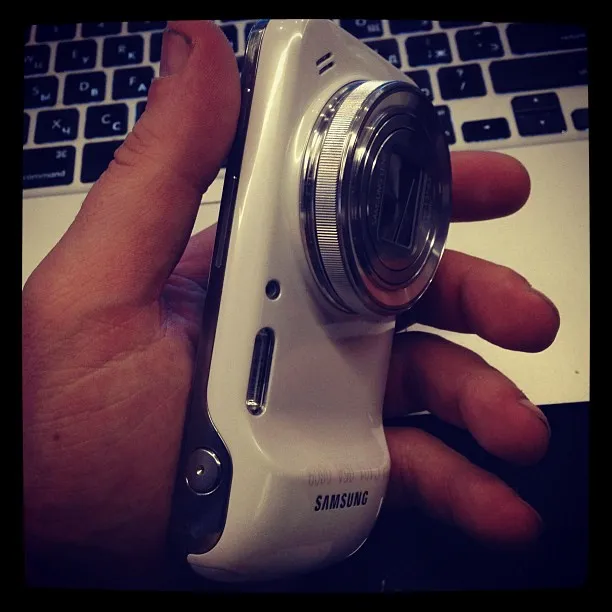
Photo: gilipollastv, CC BY 2.0, via Wikimedia Commons
Most Americans think about photo privacy in straightforward terms: keep certain images off social media, avoid sharing pictures with strangers, and delete anything sensitive before passing along a device. What almost nobody considers is the invisible layer embedded inside every image file — a structured data record that can pinpoint your home address, identify your phone model, and reconstruct your daily schedule without revealing a single pixel of the photo itself.
This layer is called metadata, and it is quietly narrating your life to anyone who cares to read it.
What Metadata Actually Is
When your smartphone or digital camera captures a photograph, it does not simply record light. It simultaneously logs a structured set of technical and contextual details about the moment of capture. This information is embedded directly inside the image file using a standard called EXIF — Exchangeable Image File Format — along with related standards such as IPTC and XMP.
A typical EXIF record might include the exact date and time the photo was taken, GPS coordinates accurate to within a few feet, the make and model of the device used, the camera's aperture and shutter speed settings, the software version running on the device at the time, and, in some cases, a thumbnail of the original image even if the main photo was later cropped or edited.
None of this information is visible when you look at the photograph. It travels silently inside the file, attached to every copy, every upload, and every share — unless someone deliberately removes it.
The Real-World Risks Are Not Hypothetical
The privacy consequences of unstripped metadata are well-documented and span both individual and institutional contexts.
In 2012, members of the hacker collective Anonymous inadvertently exposed their physical location when they posted a photograph online without removing its embedded GPS data. Law enforcement and rival researchers used the coordinates to identify individuals who had taken considerable steps to remain anonymous. The image itself revealed nothing incriminating — the metadata did all the work.
Journalists and human rights workers operating in sensitive environments have faced similar exposure. Organizations including Reporters Without Borders have issued explicit guidance warning that a single unprocessed photograph uploaded from a conflict zone or protest site can betray the location of a source, a safe house, or a correspondent.
For ordinary Americans, the risks tend to be less dramatic but no less real. Consider a few concrete scenarios:
- A person selling furniture on a marketplace app photographs items inside their home. The listing photo's GPS data confirms the seller's home address to every potential buyer — and every bad actor browsing the platform.
- An employee photographs a confidential document to send to a colleague. The EXIF data identifies the device, the timestamp, and potentially the location within a corporate building, creating an auditable trail the employee never intended to leave.
- A teenager posts an edited selfie, believing the crop removed any identifying background. The original thumbnail embedded in the EXIF record may still show the uncropped version, including details that were deliberately cut out.
Why 'Deleting' the Photo Solves Less Than You Think
Deleting a file from your device does not erase the metadata — it removes the file from the device's index while the data may persist in storage until overwritten. More critically, if the photograph was uploaded to a cloud service, shared via messaging, or posted online before deletion, every recipient retains a copy with the full metadata intact.
Some platforms do strip EXIF data automatically. Facebook and Instagram, for example, remove most location data from uploaded images — partly for privacy and partly to reduce file size. But this protection is inconsistent across platforms, it does not apply retroactively to images already shared, and it provides no protection when images are sent directly via email, AirDrop, SMS, or file-sharing services.
The assumption that a platform will handle metadata removal on your behalf is a significant and common miscalculation.
Editing History and the Layered Record
Beyond basic EXIF data, more sophisticated metadata can accumulate through the editing process. Software such as Adobe Lightroom and Photoshop writes its own metadata fields documenting every adjustment made to an image — including the original capture settings before any edits were applied. This editing history can reveal that an image was manipulated, when the manipulation occurred, and on what software version.
For investigators, journalists, and researchers engaged in digital forensics, this layered record is a valuable verification tool. For privacy-conscious individuals, it represents an additional vector of unintended disclosure.
How to Strip Metadata Before You Share
The good news is that removing metadata is neither technically complex nor time-consuming, provided you build the habit before sharing rather than after.
On Windows: Right-click any image file, select Properties, navigate to the Details tab, and click the option labeled "Remove Properties and Personal Information." Windows will allow you to create a cleaned copy of the file with all or selected metadata removed.
On macOS: The Preview application allows you to inspect EXIF data, though stripping it natively requires a workaround such as exporting to a new file with location data disabled. For more thorough removal, third-party tools are advisable.
Dedicated tools: Applications such as ExifTool (free, command-line, cross-platform), ImageOptim (macOS), and Metadata Cleaner (Linux) offer granular control over which fields to remove. ExifTool in particular is widely used by security professionals and journalists for its precision and transparency.
On iOS and Android: Both operating systems now include options to disable location tagging for the camera app entirely — a preventive approach that stops GPS data from being embedded in the first place. On iPhone, navigate to Settings > Privacy & Security > Location Services > Camera and set it to "Never." Android users can find an equivalent toggle within the camera app's settings or through location permissions in the system settings.
Before uploading to cloud services: Review the privacy settings of any service you use for photo storage. Understand what metadata those services retain, what they share with third parties, and whether they offer the ability to view or delete embedded data after upload.
Building a Metadata-Aware Habit
The broader lesson here is one of invisible exposure. The photograph you share may appear to say very little — a meal, a landscape, a candid moment. But the file wrapped around that image may be communicating your precise location, your device's identity, and your daily routine to an audience you never intended to reach.
Privacy in the digital age rarely fails catastrophically all at once. It erodes quietly, through accumulated small disclosures — a GPS coordinate here, a device fingerprint there — until a detailed portrait of your life has been assembled from data you never consciously provided.
Stripping metadata costs you less than a minute. What it protects is considerably more valuable.