Your Shipping Address Is Worth More Than You Think — and It Is Already Being Sold
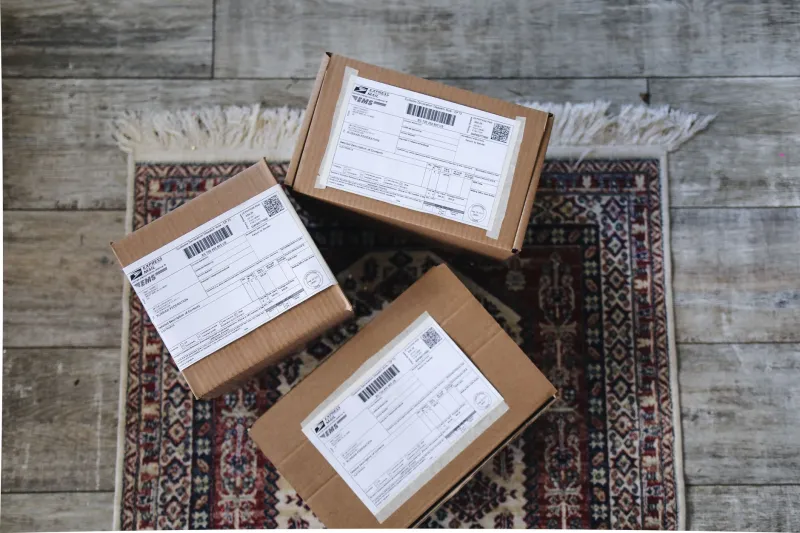
When most Americans think about protecting themselves during an online shopping session, their instinct is to check for the padlock icon in the browser bar and ensure their credit card number travels over an encrypted connection. That instinct is reasonable, but it addresses only a fraction of the data being collected at checkout. The delivery address — a detail most shoppers enter without a second thought — has quietly become one of the most commercially valuable pieces of personal information in the modern data economy.
Understanding why requires a closer look at what a shipping address actually represents, and who profits from it.
More Than a Mailing Label
A delivery address is not simply a line of text that tells a courier where to leave a package. In the hands of a data analyst, it is the anchor point for an entire behavioral profile. Your home address, cross-referenced against public records, census data, and commercial databases, can reveal your approximate household income, your likely family composition, your neighborhood's demographic makeup, and even your commute patterns.
When a retailer records that you had a package shipped to a workplace address on a Tuesday morning, that data point suggests where you are employed and when you are likely to be there. When a different order goes to a residential address on a Friday afternoon, it signals where you sleep. A gift shipped to a third location around the holidays maps a family member or close friend. Over time, the cumulative picture is remarkably detailed — and it was assembled entirely from a field most shoppers consider mundane.
The Supply Chain of Your Location Data
The path that delivery address data travels after checkout is rarely disclosed in plain language. Retailers share shipment information with third-party logistics providers to facilitate delivery, which is expected and necessary. What is less understood is what happens next.
Many logistics companies operate data divisions that aggregate shipment records across thousands of retail clients. These records, stripped of some identifying fields but still linked to physical addresses, are packaged and sold to data brokers — companies whose entire business model is the collection, enrichment, and resale of consumer profiles. Brokers then layer shipping data on top of social media activity, purchase histories, voter registrations, and property records to build what the industry calls "persistent consumer profiles."
Those profiles are sold to advertisers, insurance underwriters, financial institutions, political campaigns, and, in some cases, people-search websites that make the information available to anyone willing to pay a small subscription fee.
The Federal Trade Commission has scrutinized data broker practices in recent years, and several states — including California under the California Consumer Privacy Act — have enacted laws giving residents limited rights to request deletion of their data. However, enforcement is uneven, the opt-out processes are deliberately cumbersome, and the majority of Americans remain largely unaware that this market exists at all.
What Patterns Retailers Extract Before the Data Leaves Their Systems
Before delivery address data ever reaches a broker, the retailer itself has already extracted significant value from it. Modern e-commerce platforms apply machine learning models to shipping histories to identify behavioral patterns that inform everything from inventory placement to fraud scoring.
Frequency analysis — how often a customer ships to the same address — is used to distinguish primary residences from secondary locations. Address clustering across a retailer's customer base helps companies identify affluent zip codes worth targeting with premium promotions. Anomalous shipping patterns, such as a sudden change in delivery address or a high volume of orders going to freight forwarders, can trigger fraud flags or, alternatively, identify customers who are likely reselling goods.
Some retailers have gone further, partnering with geospatial analytics firms to map delivery concentrations onto foot-traffic data from mobile devices. The goal is to correlate online purchase behavior with physical store visits, constructing a more complete picture of how a customer moves through both the digital and physical retail world.
The Specific Risks for American Consumers
For most shoppers, the immediate consequence of this data ecosystem is targeted advertising that feels uncomfortably precise. But the risks extend beyond personalized marketing.
Physical address data that appears in people-search databases can facilitate stalking, harassment, and identity theft. Domestic violence survivors and individuals in witness protection programs have documented cases in which their location was exposed through commercial data broker listings populated, in part, by retail shipping records. Law enforcement agencies have noted that social engineering scams — including package theft coordination and "brushing" schemes in which fraudulent sellers ship unsolicited packages to real addresses to generate fake reviews — rely on harvested address data to identify targets.
There is also a subtler risk: the erosion of the reasonable expectation that your home address is a private fact. In an era when that information is commercially available, the practical obscurity that once protected physical location has largely disappeared.
Practical Steps to Reduce Your Exposure
No single measure eliminates the problem entirely, but a layered approach can meaningfully reduce the amount of physical location data you contribute to this ecosystem.
Use a P.O. box or UPS Store mailbox for non-essential deliveries. Both options decouple your home address from your retail purchase history. The annual cost is modest compared to the privacy benefit, and many carriers deliver to these locations without issue.
Consolidate orders through a single retailer when possible. Each new merchant relationship is a new data-sharing arrangement. Fewer retail accounts means fewer points of exposure.
Review privacy settings and data-sharing opt-outs at checkout. Many retailers include consent checkboxes for marketing data sharing, sometimes pre-checked. Unchecking these boxes does not prevent all data sharing, but it limits some downstream uses.
Submit opt-out requests to major data brokers. Services such as DeleteMe and privacy-focused browser extensions can automate some of this process, though manual submissions to individual broker opt-out portals are also an option. The process is time-consuming but worthwhile for individuals with elevated privacy concerns.
Be deliberate about gift shipping. Shipping a gift directly to a friend or family member from a retail site maps that person's address to your account. Consider ordering to your own address and shipping separately if privacy is a concern.
Read the privacy policy before creating a new retail account. Look specifically for language about sharing data with "affiliates," "partners," or "service providers." Broad language in these sections typically signals extensive third-party sharing.
The Broader Accountability Gap
The deeper issue is structural. American privacy law has not kept pace with the sophistication of the data economy. Unlike the European Union's General Data Protection Regulation, which imposes strict limitations on how personal data — including location data — can be processed and shared, the United States lacks a comprehensive federal privacy statute. The result is a patchwork of state laws and sector-specific regulations that leave most consumers without meaningful recourse.
Until that gap is addressed legislatively, the burden of protection falls disproportionately on individuals. That is an imperfect arrangement, but awareness is the necessary first step. The checkout form has never been just a logistics tool — and treating it as one is precisely what the data industry is counting on.