The Data Your Wrist Collects Is Worth More to Insurers Than You Realize
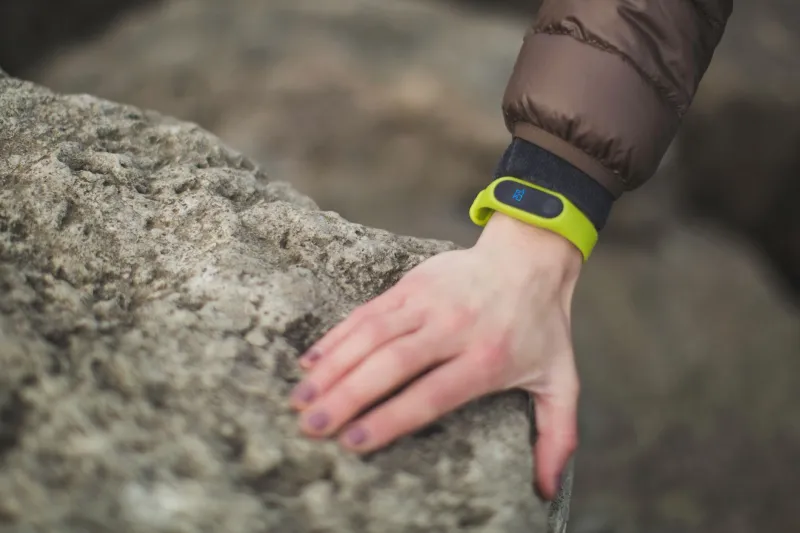
For most Americans, a fitness tracker is a wellness tool — a quiet motivator counting steps, monitoring sleep, and nudging you toward a healthier life. What the marketing rarely emphasizes is that every heartbeat logged, every restless night recorded, and every irregular rhythm flagged is also a data point entering a commercial ecosystem that operates largely out of public view.
The question worth asking is not whether your device is collecting data — it plainly is. The more consequential question is: once that data leaves your wrist, where does it actually go?
What Your Wearable Knows About You
Modern fitness trackers and smartwatches have grown dramatically more sophisticated over the past decade. Devices from major manufacturers now monitor resting heart rate, blood oxygen saturation, menstrual cycles, stress indicators derived from heart rate variability, sleep stages, electrocardiogram readings, and even irregular heart rhythm alerts that can suggest atrial fibrillation.
This is, in clinical terms, a meaningful medical dataset. A cardiologist reviewing the same information would consider it diagnostically relevant. Yet because it is collected by a consumer electronics device rather than a licensed healthcare provider, it generally falls outside the protections of the Health Insurance Portability and Accountability Act — commonly known as HIPAA.
That distinction is not a technicality. It is the legal gap through which a significant amount of your most sensitive personal information passes every day.
The HIPAA Gap That Leaves Consumers Exposed
HIPAA governs the handling of health information by covered entities: hospitals, physicians, insurers, and their business associates. Fitness tracker manufacturers are not, by default, covered entities. They are technology companies. The health data they collect is governed instead by their own privacy policies — documents that are legally binding, frequently updated, and almost universally unread.
A review of privacy policies across several major wearable platforms reveals language that permits sharing de-identified or aggregated data with third-party research partners, advertisers, and affiliated companies. Some policies allow for the sale or transfer of data in the event of a corporate acquisition — meaning a company that acquires your fitness platform inherits your biometric history along with the business.
De-identification, it should be noted, is not the same as anonymization. Academic research has repeatedly demonstrated that seemingly anonymous health datasets can be re-identified when cross-referenced with other commercially available data — including the kind routinely sold by data brokers.
Employer Wellness Programs and the Incentive Problem
One of the more direct routes through which wearable data reaches parties with financial interests in your health is the employer-sponsored wellness program. These programs, now common across large American corporations, frequently offer premium discounts, gift cards, or other financial incentives in exchange for employees wearing a fitness tracker and meeting activity targets.
The arrangement is presented as mutually beneficial. Employers argue that healthier employees reduce healthcare costs; employees receive tangible rewards. What receives less attention is the data-sharing architecture underlying these programs. In many cases, the wellness platform aggregating employee fitness data is a third-party vendor with its own data practices — and those practices may not align with what employees assume when they clip on a tracker to earn a discount on their health insurance premium.
While the Americans with Disabilities Act and the Genetic Information Nondiscrimination Act impose some limits on how employers can use health information, enforcement is uneven, and the rules were written well before biometric wearables existed as a consumer category.
The Insurance Dimension
Life insurance in the United States is not subject to the same nondiscrimination requirements that govern health insurance under the Affordable Care Act. Life, disability, and long-term care insurers are generally permitted to use health information in underwriting decisions — and several have already moved to incorporate wearable data into their models.
Some insurers now offer premium discounts to policyholders who share fitness data voluntarily, structuring the arrangement as an opt-in benefit. Critics of this model argue that what begins as voluntary quickly becomes coercive: when the alternative to sharing your data is paying a higher premium, the choice is not genuinely free.
The longer-term concern raised by privacy researchers is a feedback loop in which individuals with chronic conditions, irregular sleep, or elevated resting heart rates — metrics their wearables faithfully record — face systematically worse insurance outcomes based on data they generated in the course of trying to manage their own health.
Data Brokers as the Invisible Intermediary
Between the fitness app and the insurer often sits an entity most consumers have never heard of: the data broker. These companies aggregate personal information from dozens of sources — public records, retail loyalty programs, app usage data, and health-adjacent datasets — and sell enriched consumer profiles to businesses that include financial institutions, marketers, and, in some cases, insurers.
Several data brokers have faced regulatory scrutiny for marketing health-related consumer segments — lists of individuals categorized by inferred conditions such as diabetes, heart disease, or depression — derived from data that was never explicitly shared for that purpose. The Federal Trade Commission has taken enforcement action in a handful of such cases, but the broader market continues to operate with limited federal oversight.
Steps You Can Take to Limit Your Exposure
While no single measure eliminates the risk entirely, there are meaningful actions available to consumers who want to limit the commercial reach of their health data.
Review the privacy policy before you sync. Before connecting a new wearable to its companion app, locate the privacy policy and search specifically for language around data sharing, third-party partners, and data sales. If the policy is vague or permits broad sharing, treat that as a material risk.
Opt out of research and data-sharing programs. Most major fitness platforms include settings that allow users to opt out of data sharing with research partners or affiliated third parties. These settings are rarely surfaced prominently; look for them under privacy or account settings rather than the default dashboard.
Be cautious with employer wellness programs. Before enrolling, ask your HR department specifically which vendor manages the wellness platform, what data that vendor collects, and what its data retention and sharing practices are. Request that information in writing.
Limit app permissions. On both iOS and Android, you can restrict which apps have access to your device's health data. Regularly auditing these permissions — particularly after app updates, which sometimes reset preferences — is a low-effort protective measure.
Understand what you are exchanging for a discount. Insurance incentive programs that reward fitness data sharing should be evaluated not just for the immediate financial benefit but for the long-term implications of establishing a data-sharing relationship with an entity that has a financial interest in your health status.
The Broader Principle
The fitness tracker sitting on your wrist was almost certainly purchased with good intentions. The data it generates, however, does not remain in the closed loop between device and user that most people imagine. It flows — through apps, wellness platforms, data brokers, and commercial agreements — into a commercial infrastructure that was built to extract value from personal information.
Health data is among the most sensitive categories of personal information a person can generate. The fact that it is collected by a consumer device rather than a clinical provider does not diminish its sensitivity. It simply means the legal protections are weaker, and the responsibility for managing the risk falls more heavily on the individual.
Knowing that the pipeline exists is, at minimum, a place to start.