Power Consumed, Privacy Betrayed: The Hidden Side-Channel Hiding in Your Battery
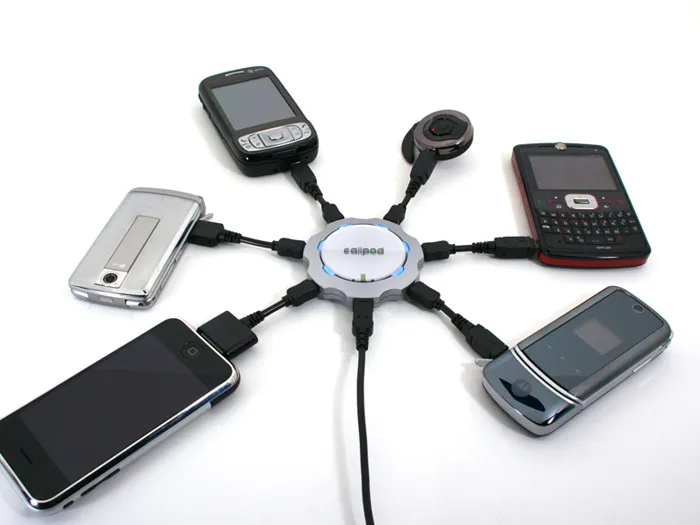
Photo: Mmckinley, Public domain, via Wikimedia Commons
When most Americans think about protecting their digital privacy, they picture familiar tools: a VPN, an encrypted messaging app, a strong password. What almost nobody pictures is their battery. Yet inside the power management systems of every phone, laptop, and tablet lies a surprisingly detailed ledger — one that security researchers have shown can be read by adversaries to reconstruct what you are doing online, sometimes without ever touching your data directly.
This is not a theoretical threat invented in a university whiteboard session. It is a documented class of vulnerability known as a side-channel attack, and it has been quietly studied — and quietly exploited — for decades.
What Is a Side-Channel Attack?
A side-channel attack does not target the data itself. Instead, it targets the physical or behavioral byproducts of the system processing that data. Think of it this way: even if you lock every window and door in your house, someone standing outside can learn a great deal by watching which lights flicker on, listening to the sounds coming through the walls, or measuring how warm different rooms get.
In computing, the "side channels" researchers study include electromagnetic emissions, timing variations, acoustic signals from hardware components, and — most relevant here — power consumption. Every computational task your device performs draws a slightly different amount of electrical current. Loading a webpage, decrypting a file, running a video stream: each of these operations leaves a distinct power signature, a kind of metabolic fingerprint unique to the workload being processed.
Researchers at institutions including Stanford University and the Georgia Institute of Technology have published work demonstrating that these signatures are measurable, reproducible, and — critically — interpretable.
How Researchers Have Turned Watts Into Windows on Your Activity
In a series of studies that received relatively little mainstream attention, security researchers showed that by monitoring the power draw of a device over time, it is possible to infer which websites a user is visiting — even when the connection is protected by HTTPS encryption. The logic is elegant and alarming: different websites have different structures, different numbers of embedded resources, and different loading sequences. Each of these characteristics produces a subtly different pattern of CPU and GPU activity, which in turn produces a subtly different pattern of power consumption.
With enough labeled samples and a trained machine-learning model, an attacker who can observe a target device's power usage can classify those patterns against known signatures and make educated guesses about browsing behavior. In controlled laboratory conditions, identification accuracy has reached impressive — and troubling — levels.
The attack surface extends beyond websites. Researchers have also demonstrated that power analysis can distinguish between running applications, identify when a user is typing versus scrolling, and in some cases correlate activity windows with specific user actions.
Who Can Actually Read Your Power Consumption?
This is where the threat model becomes important for everyday users to understand. Mounting a real-world power side-channel attack is not trivial. In most scenarios, an adversary needs one of the following:
- Physical proximity or access to the device, such as a shared charging station or a modified power cable.
- Access to a co-located system, as in a cloud or virtualized environment where multiple tenants share physical hardware. This is particularly relevant for enterprise and cloud computing contexts.
- A malicious application running on the device that has permission to read battery statistics through the operating system's power management APIs.
That last vector deserves particular attention. Both Android and iOS expose battery-level information to applications — historically with few restrictions — because developers need this data to optimize their software. Researchers have shown that sufficiently granular battery readings, sampled frequently enough, can serve as a low-fidelity but meaningful side channel. In 2015, a team of researchers at Stanford and security firm Ravelin demonstrated the "PowerSpy" attack, which used battery data accessible through the browser's now-deprecated Battery Status API to track users' locations and browsing habits.
Browser vendors have since restricted or removed access to that API in response, but the underlying principle remains: any interface that exposes power data is a potential information leak.
The Broader Landscape: Why This Matters Now
Side-channel research is not new. Power analysis attacks against cryptographic hardware have been studied since the 1990s, when researchers Paul Kocher, Joshua Jaffe, and Benjamin Jun published foundational work on the subject. What has changed is the sophistication of machine-learning tools available to classify power signatures, the proliferation of devices that expose power data through software APIs, and the increasing sensitivity of the information those devices process.
As Americans conduct more of their financial, medical, and personal lives on mobile devices, the value of inferring even coarse behavioral patterns from power data increases correspondingly. An adversary who can determine, with reasonable confidence, that a target device visited a particular financial institution's website, opened a specific health application, or communicated through a particular messaging platform has gained meaningful intelligence — without ever decrypting a single packet.
Practical Steps for Privacy-Conscious Users
The good news is that this attack class, while real, remains difficult to execute against ordinary individuals in everyday settings. The bad news is that the steps required to mitigate it are not always intuitive. Here is what security professionals recommend:
Audit application permissions carefully. Any application that requests access to battery statistics without a clear functional reason should be treated with suspicion. On Android, battery usage data is accessible to apps in ways that are not always obvious to users. Review installed applications regularly and revoke permissions that are not necessary.
Avoid unverified charging infrastructure. Public charging stations and unfamiliar USB cables represent a physical-layer risk. Use your own charger and cable, or carry a USB data-blocking adapter — sometimes called a "USB condom" — that allows power to pass while preventing data transfer.
Keep your operating system and browser updated. Browser vendors have progressively restricted access to APIs that leak power and timing information. Staying current ensures you benefit from these mitigations.
Be selective about sideloaded or third-party applications. On platforms that permit installation of apps outside official stores, the risk of encountering software designed to harvest side-channel data is meaningfully higher. Stick to vetted sources.
Consider the shared-hardware risk in cloud contexts. If you work in IT or manage cloud infrastructure, be aware that co-residency attacks — where a malicious virtual machine monitors power consumption patterns of a neighboring legitimate workload — are a documented threat in multi-tenant environments. Cloud providers have implemented mitigations, but the risk is not zero.
A Threat Worth Understanding, Even If You Cannot Fully Eliminate It
Side-channel attacks occupy an uncomfortable position in the security landscape. They are sophisticated enough that most individuals will never be directly targeted by one, yet they illustrate a principle that applies broadly: privacy leaks rarely come from the front door. The information that ultimately exposes you is often the information nobody thought to protect — the metadata, the timing, the power draw, the heat signature.
For privacy-conscious Americans, the battery side-channel is less an immediate personal threat than a useful reminder. Your device is always doing more than you can see, and the physical world it inhabits is always generating information about what it is doing. Security, in the end, is not a single lock. It is an ongoing practice of understanding where the walls are thin.