The Quiet Drain: How Streaming and App Subscriptions Keep Charging You Long After You've Moved On
Somewhere in your bank statement, there is probably a charge you have not thought about in months. It might be $6.99 for a music service you switched away from, $14.99 for a fitness platform whose app you deleted, or $9.99 for a streaming library you signed up for during a free trial and never formally canceled. It processed quietly, the way these charges always do — on the same day of the month, in the same unremarkable line of text, easy to scroll past.
This is not an accident. It is a design.
The Architecture of Passive Revenue
The subscription economy has matured into one of the most profitable models in consumer technology, and a significant portion of that profitability rests not on active, engaged users but on passive ones — people who have mentally canceled a service without ever completing the formal process. Industry analysts have long referred to this phenomenon as "subscription leakage" from the consumer's perspective, though from the platform's perspective, it is simply reliable recurring revenue.
The mechanics are straightforward. When you sign up for nearly any digital subscription in the United States, you are required to provide a payment method upfront. The terms of service — rarely read in full — authorize the company to charge that method on a recurring basis until you affirmatively cancel. The burden of action falls entirely on the subscriber. The company need only do nothing.
Auto-renewal clauses have been standard practice in the industry for over a decade. The Federal Trade Commission has issued guidance on their use, and several states have enacted laws requiring companies to send cancellation reminders before a billing cycle renews. Yet enforcement remains inconsistent, and many platforms — particularly those headquartered outside the United States — operate in regulatory gray areas that limit consumer recourse.
Why Cancellation Is Harder Than It Should Be
If forgetting to cancel were the only problem, the solution would be simple. But the design of many subscription platforms actively discourages cancellation in ways that are worth examining.
Dark patterns — a term used in UX and cybersecurity research to describe interface choices that manipulate user behavior — are pervasive in subscription management flows. Common examples include cancellation buttons that are visually buried several menus deep, multi-step confirmation screens that introduce doubt ("Are you sure? You'll lose access to all your saved content"), and retention offers that appear only at the final moment of cancellation, extending the process and increasing the likelihood that a user will abandon it.
Some platforms require cancellation through a specific channel — by phone during business hours, for instance — rather than through the app or website where the subscription was originally purchased. This friction is deliberate. Research in behavioral economics consistently shows that the harder a process is to complete, the less likely people are to complete it.
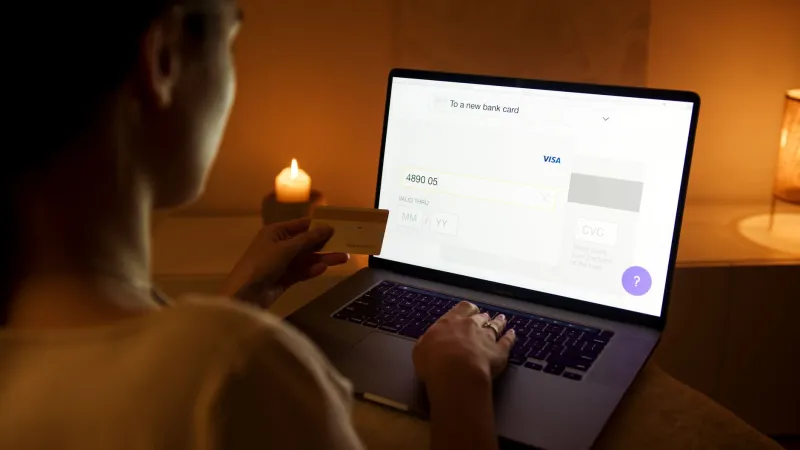
Your saved payment credentials are the final piece of this system. A credit card number stored in a platform's billing system years ago continues to function as a revenue conduit indefinitely, provided the card remains active and the account is not explicitly closed. When cards expire and are automatically renewed by issuing banks with the same account number, that continuity often persists without any action required from either party.
The Security Dimension
Beyond the financial cost, forgotten subscriptions carry a genuine security risk that is easy to overlook.
Every active account — whether you use it or not — represents a surface area for potential credential compromise. If a platform you subscribed to three years ago and never think about suffers a data breach, your email address, password hash, and payment metadata may be exposed. If that password was reused across other services (a common and dangerous habit), attackers can leverage those credentials in what security researchers call credential-stuffing attacks, systematically attempting the same username and password combination across hundreds of platforms.
A dormant streaming account you have not logged into since 2021 may feel inconsequential. But it is a live account associated with your email address, linked to a payment method, and potentially storing personal information including your viewing history, home address, and device identifiers. That is not nothing.
Conducting a Subscription Audit
The most effective defense against passive subscription drain is a systematic audit. The following approach is practical for most Americans and requires no specialized tools.
Start with your bank and credit card statements. Pull the last three months of transactions and search for recurring charges — particularly those in the $5 to $20 range that appear on the same calendar date each month. Note every service name and the amount charged.
Check your email for billing confirmations. Search your inbox for terms like "receipt," "invoice," "your subscription," and "billing confirmation." This will often surface services whose charges have become invisible in your statement but whose paper trail remains in your inbox.
Review your app store subscriptions directly. Both Apple's App Store and Google Play maintain centralized subscription management pages that list every active subscription tied to your Apple ID or Google account, including the renewal date and amount. These pages are accessible through the account settings of each platform and represent the most reliable inventory of app-based charges.
Audit your PayPal, Venmo, or digital wallet permissions. Many subscriptions are billed through third-party payment processors. Log into each account you use and review the list of merchants with pre-approved billing authority.
Document and dispute unauthorized charges. If you identify a charge for a service you believed you had canceled, contact the platform directly first. Many will issue refunds for one or two billing cycles, particularly if you can demonstrate you have not used the service. If the platform is unresponsive, contact your card issuer. Under the Fair Credit Billing Act, you have the right to dispute charges that were not authorized or that do not match the terms you agreed to.
Preventing Future Leakage
Once you have cleared the backlog, a few practices will reduce the likelihood of future subscription drift.
Consider using a dedicated card for subscriptions — either a separate low-limit credit card or a virtual card number offered by services like Privacy.com. This creates a clean, auditable record and allows you to freeze or close the card without affecting your primary finances.
Set calendar reminders for free trial end dates the moment you sign up. This single habit eliminates the most common entry point for passive subscriptions.
Be deliberate about which platforms you allow to store your payment credentials. Fewer stored cards means fewer vectors for ongoing charges — and fewer accounts to monitor in the event of a breach.
A System Designed to Outlast Your Attention
The subscription trap is not a glitch. It is a feature of a business model that depends on the gap between the moment you stop using a service and the moment you get around to canceling it. For most people, that gap is measured in months. For some, it stretches into years.
Understanding the mechanics — the auto-renewal clauses, the friction-laden cancellation flows, the silent persistence of saved payment credentials — is the first step toward reclaiming control. The money involved may seem small in any given month. Across a year, and across all the services quietly billing you in parallel, it rarely is.